
💡 Introduction – Why This Topic Matters Today
Imagine walking into a clinic, and instead of receiving the same medicine as everyone else with your condition, you get a treatment plan tailored exactly to your genes, lifestyle, and health history. Sounds futuristic? Not anymore.
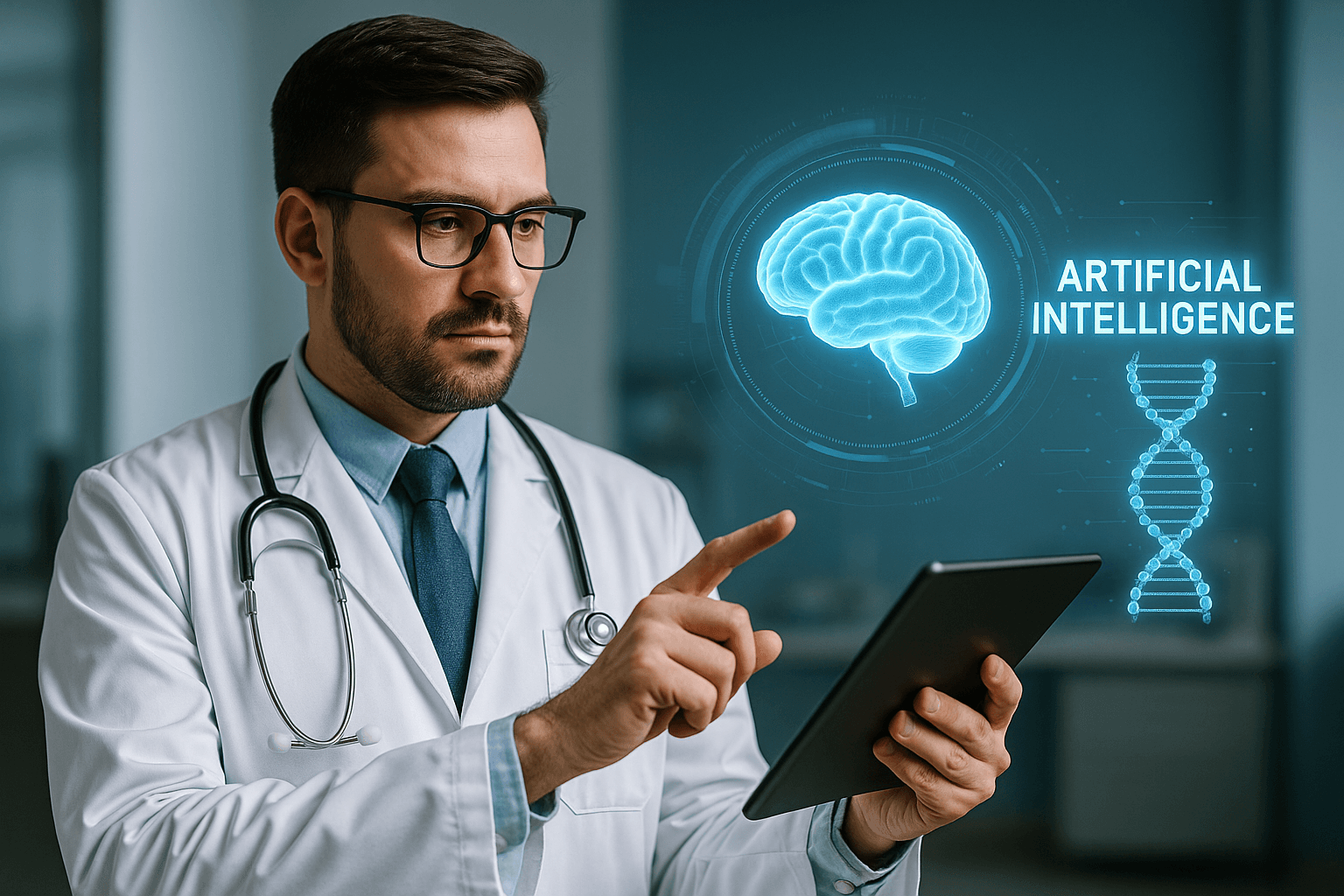
Thanks to Artificial Intelligence (AI), this vision is quickly becoming a reality. AI is revolutionizing healthcare with a shift towards personalized medicine—an approach that promises better results, fewer side effects, and a more human-centered health system.
In this blog, we’ll explore how AI is powering this transformation, what it means for countries like Bangladesh, and why this matters for the global future of healthcare.
🧬 What is Personalized Medicine?
Personalized medicine (also called precision medicine) is a medical model that customizes healthcare decisions and treatments based on an individual’s:
- 🧪 Genetic makeup
- 🧬 Biomarkers
- 👤 Lifestyle and behavior
- 📜 Medical history
Unlike the “one-size-fits-all” approach, this method tailors interventions to what will work best for you.
🤖 How AI is Driving Personalized Healthcare
AI can analyze vast datasets from:
- Electronic health records
- Genetic sequencing
- Wearables and health apps
- Imaging and pathology reports
And then, in milliseconds, suggest optimal treatment options.
🔍 For example:
- AI tools like IBM Watson for Genomics scan a patient’s DNA to recommend cancer treatments.
- In Bangladesh, startups are beginning to explore AI-based diagnostics for diabetes and cardiac risks.
As Dr. Eric Topol, a leading AI researcher in medicine, says:
“AI won’t replace doctors, but doctors who use AI will replace those who don’t.”
🏥 Real-World Examples from Global Healthcare Systems
Here’s how AI is already transforming personalized care across the world:
- USA: Mayo Clinic uses AI to predict heart disease from EKGs even before symptoms appear.
- UK: The NHS is using DeepMind AI to detect early-stage eye diseases.
- India: AI algorithms analyze retinal scans to prevent blindness due to diabetes.
- Bangladesh (Emerging): AI chatbots assist rural doctors in triage and diagnostics, improving accuracy and saving time.
🌐 Learn more: Harvard Health on AI and Medicine
🔍 The Benefits of AI-Powered Medicine
✅ More accurate diagnosis
✅ Faster treatment planning
✅ Early disease prediction
✅ Lower healthcare costs
✅ Improved patient outcomes
✅ Better access for rural areas
AI doesn’t just help doctors—it empowers patients with smarter health decisions.
⚠️ Challenges and Ethical Considerations
Of course, this revolution isn’t without hurdles:
- ⚖️ Privacy: Sensitive health data must be protected.
- ⚙️ Bias: AI models trained on foreign data may misdiagnose local populations.
- 💸 Cost & Infrastructure: Developing countries like Bangladesh need tech investment and training.
- 🤖 Over-reliance on AI: Human expertise is still essential.
These issues require global ethical frameworks and strong data laws, especially in underregulated regions.
🔮 What the Future Holds – 5 to 10 Years from Now
The future is closer than we think:
- 🧬 Personalized cancer vaccines using AI predictions
- 🩻 AI detecting diseases from breath or saliva
- 🧠 Mental health apps using AI to detect depression early
- 🌍 Cross-border AI platforms for global epidemics
By 2030, personalized AI-driven care may become the global standard—even in rural clinics.
🧠 Expert Opinions and References
- World Health Organization (WHO) recognizes AI as key to achieving universal healthcare.
- According to McKinsey, AI in healthcare could generate $300B+ annually in value globally.
- Lancet Digital Health Journal regularly publishes peer-reviewed studies on AI-driven treatments.
🌍 Why It Matters for Bangladesh and the World
Bangladesh has a unique opportunity to leapfrog legacy systems by:
- Integrating AI-powered telemedicine
- Training healthcare workers in basic AI literacy
- Collaborating with global tech firms and universities
Smart policy, partnerships, and awareness can ensure that personalized medicine isn’t just a luxury for rich countries—it can be a lifesaving tool for developing nations too.
💭 Final Thoughts – Embrace the Revolution
The AI wave is here—and it’s healing with precision.
As we move forward, let’s stay informed, ensure ethical use, and embrace technology that puts people first. Whether you’re a doctor, policymaker, patient, or just a curious reader—this is your revolution, too.
📌 Stay healthy. Stay informed. The future is personal.
Leave a Reply