
Introduction: Must We Celebrate Another Religion’s Festival to Prove Our Tolerance?
In Bangladesh, one popular slogan frequently appears during religious celebrations: “Religion is personal, but festivals belong to everyone.”
It is generally presented as a symbol of secularism, social harmony and mutual respect.
It sounds beautiful. But have we ever stopped to examine what it actually means? Are religious festivals really everyone’s festivals, or are we gradually turning celebrations rooted in particular religious beliefs into social expectations for people of every faith?
Let me clarify something first. This article is not intended to disrespect any religion or its celebrations. Muslims, Hindus, Christians, Buddhists and people of other beliefs deserve equal dignity and respect.
My question is different: Does someone have to participate in another religion’s celebration to be considered tolerant? Is attending another community’s religious festival a requirement for being progressive or civilized?
I believe these questions deserve a thoughtful discussion.
1. Religious Festivals Have Their Own Identity
A religious festival is not simply an occasion for entertainment. It is often connected to specific beliefs, traditions, historical events, rituals and spiritual meanings.
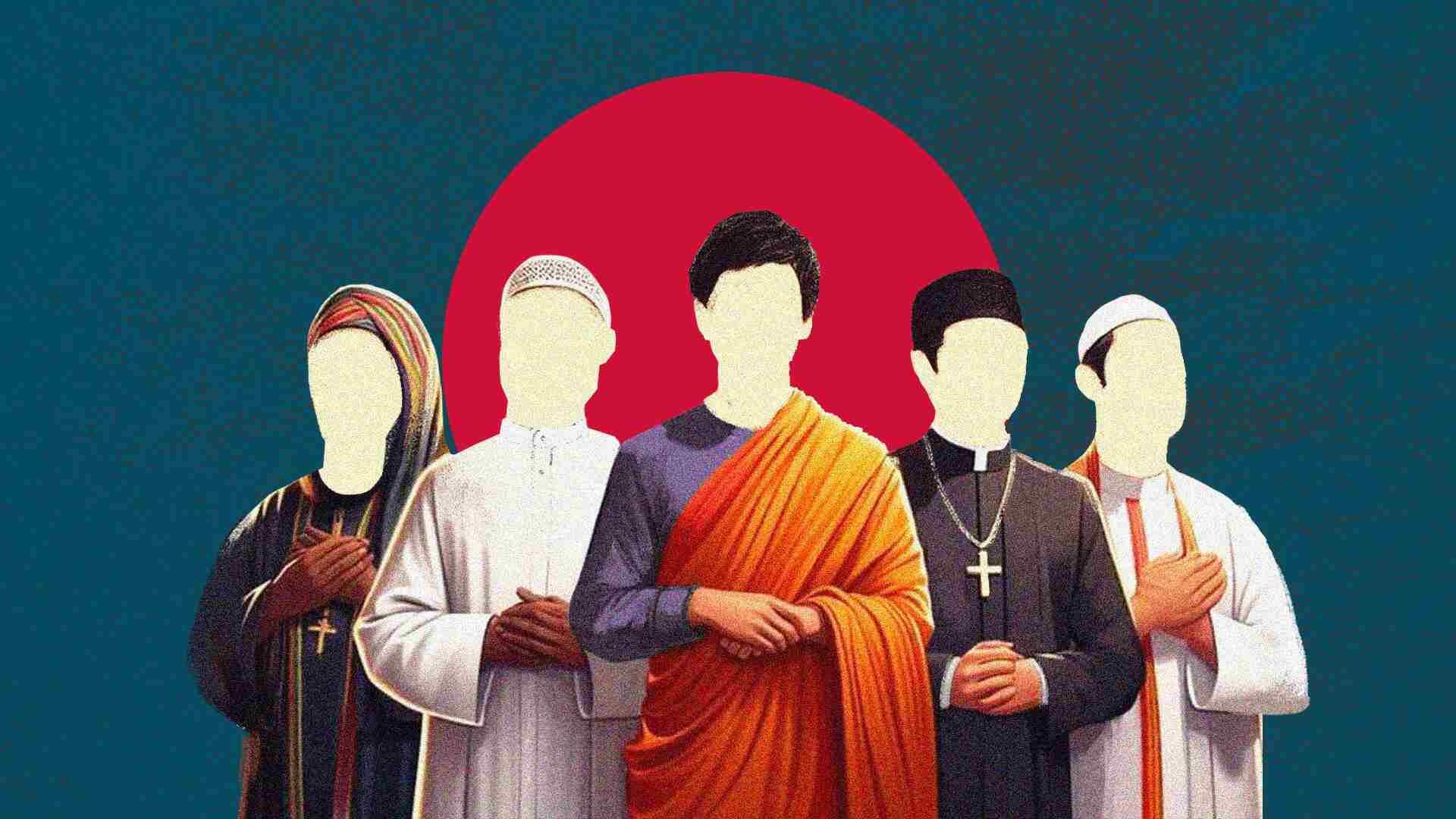
Eid al-Fitr and Eid al-Adha are Islamic religious celebrations. Durga Puja is an important Hindu religious festival. Christmas holds religious significance for Christians. Vesak is an important Buddhist celebration.
Each festival has its own religious identity.
Respecting that identity does not mean excluding people of other faiths from society.
In a pluralistic society, every religious community should have the freedom to preserve its own traditions.
Muslims can cherish Eid, Hindus can cherish Durga Puja, Christians can value Christmas and Buddhists can observe their religious celebrations.
Why should respecting another community’s festival require someone to participate in its religious practices or move beyond their own religious convictions?
2. Two Different Interpretations of the Popular Slogan
Supporters of the slogan often explain that they do not mean everyone should perform another religion’s rituals. They simply mean that people can share happiness, exchange greetings and enjoy social harmony.
That interpretation is understandable.
However, there is another question worth considering.
When the slogan becomes a widely expected social behaviour, does it sometimes create pressure on people to participate in celebrations that are not part of their own religious traditions?
If someone does not visit a Puja mandap, attend an Eid gathering or participate in another community’s festival, should that person automatically be considered less tolerant or less secular?
This is where I have concerns.
A slogan may have a positive intention, but that does not mean every interpretation or social expectation associated with it is necessarily reasonable.
We can promote social harmony without turning participation in religious celebrations into a measure of someone’s character.
3. Is Social Harmony Only Necessary During Festivals?
This is perhaps the most important question.
Exchanging greetings during Eid or welcoming a Hindu neighbour during Durga Puja can be thoughtful gestures.
But does harmony exist only during Eid, Puja or Christmas?
What about standing beside a neighbour during difficult times throughout the year? What about protecting their children, respecting their religious freedom and speaking up when their home or place of worship faces threats?
Are these not equally important expressions of social harmony?
If we ignore the rights of people from other religious communities throughout the year but suddenly share messages about unity during festivals, how meaningful is our commitment?
Social harmony should not be a seasonal campaign.
It should be reflected in everyday behaviour.
4. Does Not Attending Another Religion’s Festival Make Someone Intolerant?
Not necessarily.
A Muslim may choose not to participate in certain religious rituals because of personal religious convictions. A Hindu may also have religious reasons for avoiding particular practices associated with another faith.
Such decisions can be part of personal religious freedom.
On the other hand, someone may choose to visit a friend’s celebration as a social guest. That is also a personal decision.
We need to distinguish between two important principles:
- The freedom to follow one’s own religious beliefs and personal convictions.
- The responsibility to respect the religious freedom and civil rights of others.
People should have freedom in the first area, while respecting the second is a shared responsibility.
A Muslim does not need to participate in a Hindu religious celebration to defend the religious rights of Hindus.
Likewise, a Hindu does not need to participate in an Islamic religious celebration to respect Muslims.
Participation should not become a compulsory test of tolerance.
5. Why Do Some People Feel Uncomfortable Expressing Religious Identity?
Another issue deserves attention.
In certain social circles, expressing religious beliefs can sometimes be interpreted as being conservative, outdated or less intellectually open.
This may discourage people from discussing their faith openly.
But why should someone feel uncomfortable expressing their religious identity?
A Muslim expressing love for Islam does not automatically demonstrate hostility toward other religions.
A Hindu expressing pride in their traditions does not automatically disrespect others.
Likewise, a person who does not believe in religion has the right to express that position.
A genuinely inclusive society should allow people to express their beliefs without fear of being stereotyped or socially judged.
6. Religious Freedom Includes the Freedom to Decline Participation
Religious freedom is not limited to the ability to practice one’s religion. It also involves the freedom to make personal decisions about religious participation.
Some people may participate in other communities’ social celebrations. Others may prefer to maintain a distinction between their own religious practices and those of other communities.
Both decisions should be respected, provided that they do not violate the rights of others.
Nobody should have to prove that they are progressive or tolerant by crossing a personal religious boundary.
At the same time, personal religious convictions cannot justify threatening others, attacking places of worship, preventing lawful religious celebrations or discriminating against people because of their faith.
Freedom and responsibility must exist together.
7. What Kind of Social Culture Should We Build?
We need a society where:
- Muslims can celebrate Eid according to their religious beliefs.
- Hindus can observe Durga Puja according to their traditions.
- Christians can celebrate Christmas.
- Buddhists can observe their religious festivals.
- People from other communities can exchange greetings or participate in social gatherings if they wish.
- Nobody is ridiculed for choosing not to participate.
- Everyone’s safety, dignity and civil rights are protected.
This vision does not demand religious uniformity.
It encourages mutual respect without imposing unnecessary social expectations.
Conclusion: Harmony Does Not Require Becoming Like One Another
Bangladesh is a country of diverse religions, cultures, languages and ways of life.
This diversity is part of our social reality. Protecting it requires mutual respect, tolerance and a strong commitment to equal citizenship.
People may use the slogan “Religion is personal, festivals are for everyone” to express social happiness and friendship. They are free to do so.
However, the slogan should not become a compulsory social standard, nor should participation in another religion’s celebration become a certificate of progressiveness, secularism or good character.
I can respect another person’s religious celebration while choosing not to participate in it. There is no necessary contradiction between these two positions.
True harmony does not mean practising one another’s religious rituals. It means respecting one another’s religious freedom as sincerely as we expect others to respect our own.
Kindness, humanity and mutual respect should exist throughout the year. They should never be limited to particular religious celebrations.
What do you think? Should participation in another religion’s festival remain a personal choice, or is it becoming an unspoken social expectation?
Share your thoughts. Respectful disagreement is welcome.
Leave a Reply